SDG 1 · No Poverty · Mombasa, Kenya
Business Growth Pathway
Rebuilding livelihoods in Mombasa's Likoni, Moroto, and Bangladesh slum settlements.
3
Slum regions served: Likoni 203, Moroto, Bangladesh
152+
Active enterprises seeking grants to scale
182+
Jobs created by supported microenterprises
The Challenge: Limited Access, Fragile Livelihoods
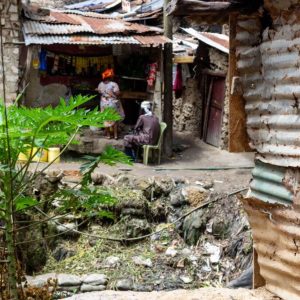
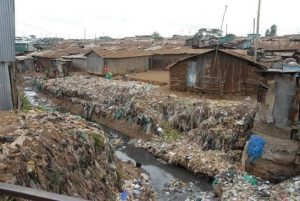
Women, youth, children, and persons with disabilities make up most of the vulnerable residents of Likoni 203, Moroto, and Bangladesh. Many have had little or no formal schooling. Jobs, skills training, and stable income are hard to find, so most adults rely on casual, low-paying, and insecure work in town.
This drives extreme poverty, pushes children out of school, and leaves young people at risk of substance abuse, crime, and — for girls — early marriage. Many residents run small street businesses. But these stay weak, held back by limited business skills, little capital, poor workspaces, and a lack of raw materials.
Our Response: Coaching, Capital, Workspace, and Climate Resilience
Civicom Aid responds with business coaching, better workspaces, productive tools, raw materials, ongoing social support, and skills to withstand climate shocks. Stronger enterprises create jobs, raise household income, return children to school, and open the door to college for young people.
Level 1 — Coaching We coach entrepreneurs through five stages of business growth: starting, growing, expanding, strengthening, and financing — plus climate resilience. Training happens in person, supported by an AI app.
Level 2 — Productive Capital We provide better workspaces, the tools needed to produce goods and services, and essential raw materials.
Level 3 — Social Support Entrepreneurs get ongoing support from our team, fellow business members, and the AI app — so no one grows alone.
From Coaching to Jobs, Income, and School Return
Our Goal Grow decent jobs for people in slum communities from 182 to 2,000 by 2030.
Where We Work:
Three Slum Regions of Kenya
Each settlement faces its own barriers. We work in all three.
Likoni 203 Slum Region
A crowded coastal settlement with few economic opportunities and high rates of school dropout and youth unemployment.
Bangladesh Slum Region
A deeply marginalized settlement where persons with disabilities are among the most excluded from economic life.
Moroto Slum Region
An informal community where women and youth face extra barriers to income and resources.
Current Projects Seeking Grants
152+ enterprises ready to grow
These businesses have the skills and the drive. Now they need capital and steady support to grow. Please contact us for more details and more vetted enterprises.
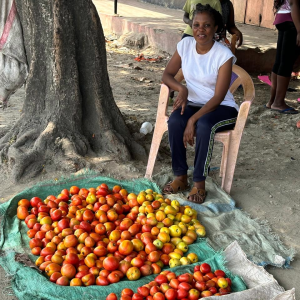
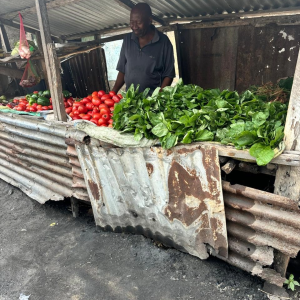
Business: Pure Green Grocery
Sector: Grocery · Retail
Needs: A fresh-produce business serving local homes. It needs capital for more stock and better storage.

Business:Kosi Enterprise
Sector: Food · Service
Needs: A food business with real growth potential. It needs equipment and working capital to serve more customers, reliably.
Business: Danilux Enterprises
Sector:Manufacturing
Needs: A small production business. It needs workspace upgrades and capital to grow output and stay strong.

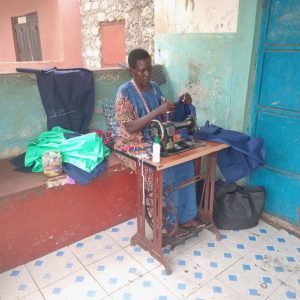
Business: Dimos Tailors
Sector:Tailoring · Fashion
Needs: A tailoring business run by skilled hands. It needs better sewing equipment and steady access to materials to keep up with demand.
Business: Zuma Grocery
Sector: Grocery · Retail
Needs: A community grocery store. It needs stock capital and coaching to move from just getting by to steady profit.
Business: Budini Poultry
Sector: Livestock · Poultry
Needs: A poultry business on the rise. It needs capital for feed, housing, and animal care to become fully self-sustaining.
Evidence from the Field: Real Businesses. Real Jobs. Real Change.
Tamu Tamu Dishes
Before
In the beginning, Ms Bethian Mwaracho was not running a business so much as holding one together with her bare hands, working out of a single old room. She had just one worker helping her, someone she could not even afford to pay properly and who had no real training in cooking or serving food. Meals came out inconsistent, service was slow, and customers who walked in once often did not come back — and it is not hard to imagine how discouraging it must have felt to watch people walk away without knowing why. Behind the scenes, there was no income steady enough to change any of it.
Now
Everything about Tamu Tamu Dishes looks different now, and it began with something simple: Bethian was given the chance to learn, and to believe she could do this well. With coaching, productive capital, and ongoing support through Civicom Aid, she learned how to prepare food consistently, train the person working alongside her, and welcome customers in a way that made them want to return — and one can imagine the quiet joy of watching a customer walk back through the door for a second time. The single unpaid helper of before has steadily grown into a team of five, all properly paid, all properly trained. Word has spread, and people now come to Tamu Tamu Dishes not just for the food, but because they trust what they will find there.
The most telling change has nothing to do with food at all. Within one year of Civicom Aid's investment, fifteen children — Bethian's own and those of her employees — went back to school, and living conditions improved alongside it. Behind every plate served at Tamu Tamu Dishes is now a child sitting in a classroom who would not have been there before, and it is worth imagining what it means for a parent to send their child to school knowing the income to keep them there is steady and real. This is not a business that changed once. It continues to grow, month after month, family after family.
New Business
Bethian's story is no longer one of survival. It is one of hope. What started with one untrained worker has, within two years, generated enough income for Bethian to open a second business with one paid employee — Civicom Aid's goal of creating jobs and returning children to school, fulfilled.
Malezi Bora Daycare
Before
Fay Mbodze did not begin with a business at all. She began with Civicom Aid's coaching on how to start one. With no financial capital or assets — only the skills Civicom Aid had given her, and a room borrowed from a friend — she started Malezi Bora Daycare to care for children on behalf of mothers who needed to work but had been forced to stay home instead. The room was old, dirty, and leaking, but Fay used what she had learned to make a start of it.
Now
A grant investment gave Fay the one thing she never had before: a starting point. From nothing, she built Malezi Bora Daycare from the ground up, and it is worth pausing to imagine what it feels like to watch something you only dreamed about slowly become real in front of you. What used to keep parents away was simple — there was nowhere for them to go at all — and what draws them in now is just as simple: a safe, caring place that did not exist before Fay created it. The daycare has since grown to include three paid members of staff, and Fay now moves through her days with a happiness that comes from knowing she built something out of nothing.
That happiness reaches further than the daycare walls. Within one year of Civicom Aid's investment, ten children — Fay's own and those of her employees — returned to school. Imagine the relief of a parent who no longer has to choose between earning a living and raising their child, because both are finally possible at once. Malezi Bora Daycare is not a story with a single happy ending. It is a business that keeps giving, term after term, family after family.
What the community says
What started as a dream with no foundation has become a place of stability and joy for an entire community, and one can only imagine the pride Fay feels each morning walking into a daycare that used to exist only in her mind. Three people now find purpose and income through her work, ten children now walk into classrooms instead of staying behind, and countless more find safety and warmth because Fay turned nothing into something real — and keeps building on it still.
Support a Business. Change a Household.
Your grant or sponsorship helps an entrepreneur create jobs, restore household income, and return children to school.
CIVICOM AID Equipping vulnerable communities in Kenya and Uganda with access to education, sustainable agriculture, and income-generating opportunities.
Email: info@civicom.org
Call/WhatsApp: +254 797 946 000